A few months ago I wrote an article about the higher cost of using non-English languages for prompting. It covered only European languages because of their relative similarity to each other and because I know some of them. But the article caught people’s attention, and a few readers asked me to research Asian languages in the same way. So I decided to continue my research and write Part II.
I inherited all the limitations of my approach from the first article to keep the results consistent. Allow me to remind you what they are: this is an informal experiment that covers three texts and a few dozen languages, not scientific research with statistics based on huge datasets. In this article I count tokens only for two Anthropic models, Opus and Sonnet. Using Fable for this experiment would cost me extra money, and Haiku is not a model I use often, so I am not interested in diving deep into it. Since I published the first part of my article, Anthropic has released version 5.5 of both models, and I assume that version 5.5 uses the same tokenizer as version 5. But it is only an assumption, so I decided to continue with version 5 for the sake of consistency.
To count input tokens, I wrote a small console tool that calls the Anthropic API. It is available on my GitHub, so you can use it to do your own research or to verify my results:
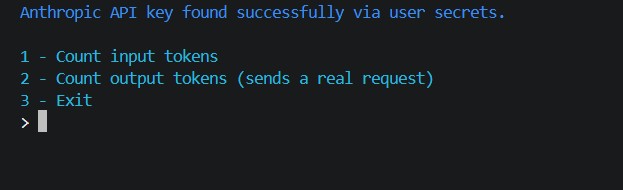
Claude API console wrapper UI
Now allow me to present the prompts themselves: a technical prompt to create a UI/UX design for a desktop tool (it is pretty similar to the one I used in my earlier article, “Claude Design: A first Look”), a literary text from Alice’s Adventures in Wonderland, and a practical prompt asking an AI to plan a trip to Prague. Here they are:
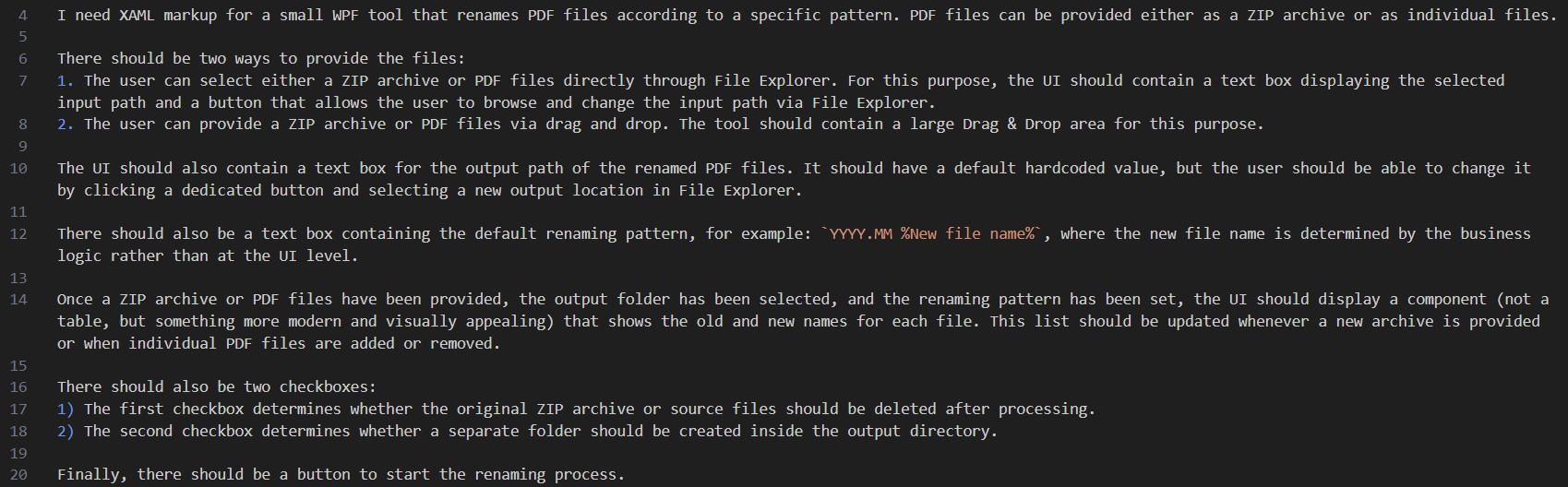
Technical prompt for Claude Design
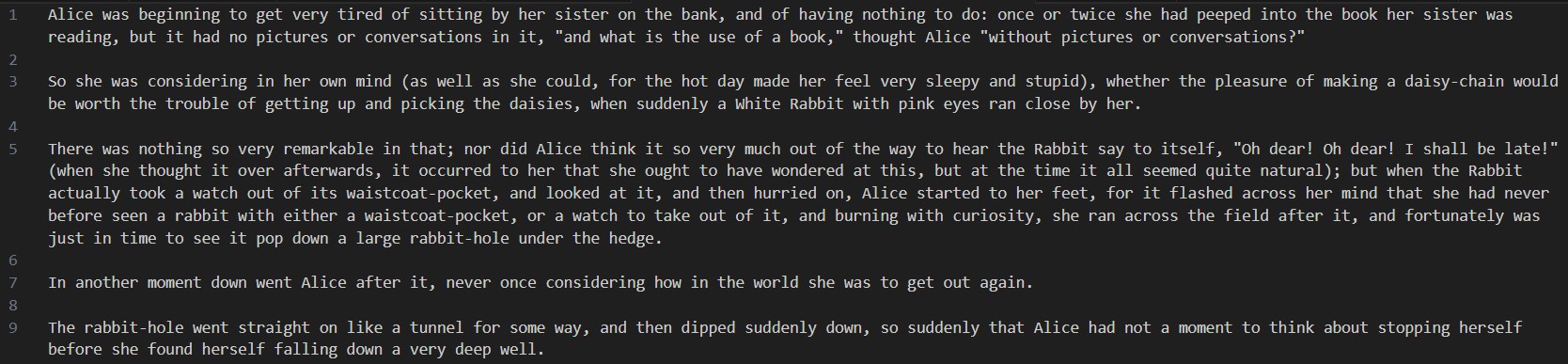
Literary text: first few paragraphs from "Alice`s Adventures in Wonderland"

Prompt asking an AI to plan a Prague trip
All the prompts were translated with Google Translate. Because of that, all the translations have approximately the same style. Machine translation is usually more standardized than human translation and uses more typical words and phrases. It means that the texts are cheaper for a tokenizer, so the results are slightly more optimistic than they would be in the real world. There is another nuance: the quality of Google Translate depends on the language, namely on the amount of data available for it. This also affects the cost that I am measuring. A poor translation can omit parts of the content, so the text becomes shorter and the ratio drops.
Now that we have covered the inherited limitations, let’s take a look at how the languages are grouped. When considering this set of languages, I interpret Asia very broadly, in the geographical sense, to include the Middle East and the Caucasus.:
- Character-based scripts (Simplified Chinese, Traditional Chinese, Japanese). This is the most interesting group for me, because I have a hypothesis that the Chinese ratio will be really close to 1, maybe even below it. This assumption is based on the fact that a vast part of the training dataset is written in Chinese. Also, I think that Traditional Chinese will be slightly more expensive than Simplified Chinese. In Chinese, a single character often represents a whole word or its root. Japanese is formally written with a mixture of kanji and syllabic scripts, but its logographic foundation is shared with Chinese, so it makes sense to compare it specifically with Chinese.
- Scripts of Indian origin (Bengali, Hindi, Thai). These scripts have the same ancestor and work on the same principle: a consonant and a vowel are written together as a single joined unit, with diacritics attached to the base letter above, below, and beside it. I place Thai here rather than with Chinese, and this is deliberate. Within this one script family, Thai is the only one written without spaces between words, whereas Hindi and Bengali use spaces.
- Right-to-left scripts (Arabic, Hebrew, Persian, Urdu). What unites these languages is not only the writing direction but also a feature that matters to us: short vowels are usually omitted in ordinary text. A word looks like a set of consonants, and the reader reconstructs the vowels on their own. The text comes out shorter, and it may well be an advantage for the tokenizer. This is one more hypothesis that the group will test along the way. The group includes Arabic, Persian, and Urdu (one script, different languages) and Hebrew, which has few speakers but a disproportionately large presence online. It makes an interesting contrast to Georgian and Armenian.
- Cyrillic and unique alphabets (Armenian, Georgian, Kazakh, Korean). Apart from Kazakh, which uses Cyrillic, each language in this group has its own unique alphabet. Korean is formally an alphabet too, except that its letters are assembled into syllable blocks. It belongs here as a control case: an unfamiliar script, but plenty of data. Armenian and Georgian, I assume, will be pretty expensive: they have unique alphabets and are poorly represented in training datasets.
- Latin script (English, Azerbaijani, Indonesian, Turkish, Vietnamese). Obviously, English is not an Asian language, but I have to include it here because I compare the token count of each language with English (it dominates the training data). Plus, it is necessary for consistency with the first article. Also, there are a few interesting points to measure within this group: Indonesian vs Vietnamese (a language with almost no diacritics against one with some of the heaviest diacritic use in the world) and Turkish vs Azerbaijani (closely related languages, but different training set sizes).
Now I should say a few words about the coefficient. I am measuring it as the ratio of the input token count for a particular language to the input token count of the same text in English. I assume that in nearly all cases it will be considerably greater than 1. I expect only Chinese to come close to this value, or even fall below it. So, let’s finally measure the token count, calculate the coefficient, and observe the results for the UI/UX prompt:
| Language | Opus 5/Sonnet 5 | Coefficient |
|---|---|---|
| English | 519 | 1.00 |
| Character-based scripts | ||
| Chinese (Simplified) | 666 | 1.28 |
| Chinese (Traditional) | 697 | 1.34 |
| Japanese | 768 | 1.48 |
| Scripts of Indian origin | ||
| Bengali | 1575 | 3.03 |
| Hindi | 1327 | 2.56 |
| Thai | 1388 | 2.67 |
| Right-to-left scripts | ||
| Arabic | 1006 | 1.94 |
| Hebrew | 999 | 1.92 |
| Persian | 1216 | 2.34 |
| Urdu | 1535 | 2.96 |
| Cyrillic and unique alphabets | ||
| Armenian | 1309 | 2.52 |
| Georgian | 1338 | 2.58 |
| Kazakh | 1034 | 1.99 |
| Korean | 1007 | 1.94 |
| Latin script | ||
| Azerbaijani | 1175 | 2.26 |
| Indonesian | 893 | 1.72 |
| Turkish | 1022 | 1.97 |
| Vietnamese | 978 | 1.88 |
The input token count and the coefficient for the UI/UX prompt
You have probably noticed that the input token counts are the same for both models, Opus and Sonnet. As far as I understand, they use the same tokenizer, so this result is expected, and the experiment simply confirmed it once again. So, let’s take a look at the numbers.
Another expected result is that the Chinese coefficients (1.28 for Simplified Chinese and 1.34 for Traditional Chinese) are reasonably close to 1 and lower than for any European language (the best of them, French, scored 1.43). Another verified assumption is that Traditional Chinese is slightly more expensive than Simplified Chinese, but the difference (just 0.06) is barely noticeable. The surprising part of these results is that a prompt in Japanese (1.48) also costs less than a prompt in most European languages.
Let`s continue with "Alice`s Adventures in Wonderland".
| Language | Opus 5/Sonnet 5 | Coefficient |
|---|---|---|
| English | 539 | 1.00 |
| Character-based scripts | ||
| Chinese (Simplified) | 607 | 1.13 |
| Chinese (Traditional) | 573 | 1.06 |
| Japanese | 713 | 1.32 |
| Scripts of Indian origin | ||
| Bengali | 1242 | 2.30 |
| Hindi | 977 | 1.81 |
| Thai | 1275 | 2.37 |
| Right-to-left scripts | ||
| Arabic | 890 | 1.65 |
| Hebrew | 863 | 1.60 |
| Persian | 1016 | 1.88 |
| Urdu | 1247 | 2.31 |
| Cyrillic and unique alphabets | ||
| Armenian | 1113 | 2.06 |
| Georgian | 1052 | 1.95 |
| Kazakh | 908 | 1.68 |
| Korean | 930 | 1.73 |
| Latin script | ||
| Azerbaijani | 857 | 1.59 |
| Indonesian | 865 | 1.60 |
| Turkish | 739 | 1.37 |
| Vietnamese | 951 | 1.76 |
The input token count and the coefficient for the literary text from "Alice`s Adventures in Wonderland"
The first thing I would like to note is that for the literary text, Traditional Chinese (1.06, almost as cheap as English) costs less than Simplified Chinese (1.13). Persian is more expensive than Arabic for both texts, despite the shared script. Azerbaijani also costs slightly more than Turkish for both texts, despite their very similar alphabets and grammar. It looks like my conclusion from the first article, where I suggested that the amount of training data for a language is more important than the properties of the language itself, is confirmed.
| Language | Opus 5/Sonnet 5 | Coefficient |
|---|---|---|
| English | 286 | 1.00 |
| Character-based scripts | ||
| Chinese (Simplified) | 330 | 1.15 |
| Chinese (Traditional) | 343 | 1.20 |
| Japanese | 392 | 1.37 |
| Scripts of Indian origin | ||
| Bengali | 847 | 2.96 |
| Hindi | 719 | 2.51 |
| Thai | 878 | 3.07 |
| Right-to-left scripts | ||
| Arabic | 645 | 2.26 |
| Hebrew | 542 | 1.90 |
| Persian | 689 | 2.41 |
| Urdu | 799 | 2.79 |
| Cyrillic and unique alphabets | ||
| Armenian | 809 | 2.83 |
| Georgian | 691 | 2.42 |
| Kazakh | 557 | 1.95 |
| Korean | 543 | 1.90 |
| Latin script | ||
| Azerbaijani | 577 | 2.02 |
| Indonesian | 531 | 1.86 |
| Turkish | 488 | 1.71 |
| Vietnamese | 594 | 2.08 |
The input token count and the coefficient for the typical user prompt
Interestingly, Kazakh was on par with Turkish on the technical prompt and was cheaper than Azerbaijani. On the “Alice in Wonderland” prompt, it fell behind Turkish by 0.31 and was now more expensive than Azerbaijani (1.68 versus 1.59), and the same pattern held on the Prague prompt. In a text without technical terms, there are almost no words shared with Slavic languages, and the Cyrillic advantage disappeared.
In Hindi and Bengali, the Prague prompt is almost as expensive as the technical prompt, with a difference of less than 0.1. The coefficient for “Alice in Wonderland,” on the other hand, is 0.7 lower than for both. The high cost of the technical prompt can be explained by the fact that Google Translate, as I found out, renders the terms with formal, literary words of Sanskrit origin, which are not widely represented in the training data. But the Prague prompt contains no technical terms: it is an ordinary request to plan a trip, and it costs just as much. Perhaps the reason is that both expensive prompts are direct requests to a conversation partner: find, pick, tell me what to take. And in Hindi, Bengali, and Thai, a polite request is expensive because of its grammar. “Alice in Wonderland,” by contrast, is a third-person narrative in the past tense: five long paragraphs with relatively few sentences.
| Language | Claude Design prompt | Alice in Wonderland | Travel planning prompt | Arithmetic mean |
|---|---|---|---|---|
| English | 1.00 | 1.00 | 1.00 | 1.00 |
| Character-based scripts | ||||
| Chinese (Simplified) | 1.28 | 1.13 | 1.15 | 1.19 |
| Chinese (Traditional) | 1.34 | 1.06 | 1.20 | 1.20 |
| Japanese | 1.48 | 1.32 | 1.37 | 1.39 |
| Scripts of Indian origin | ||||
| Bengali | 3.03 | 2.30 | 2.96 | 2.76 |
| Hindi | 2.56 | 1.81 | 2.51 | 2.29 |
| Thai | 2.67 | 2.37 | 3.07 | 2.70 |
| Right-to-left scripts | ||||
| Arabic | 1.94 | 1.65 | 2.26 | 1.95 |
| Hebrew | 1.92 | 1.60 | 1.90 | 1.81 |
| Persian | 2.34 | 1.88 | 2.41 | 2.21 |
| Urdu | 2.96 | 2.31 | 2.79 | 2.69 |
| Cyrillic and unique alphabets | ||||
| Armenian | 2.52 | 2.06 | 2.83 | 2.47 |
| Georgian | 2.58 | 1.95 | 2.42 | 2.32 |
| Kazakh | 1.99 | 1.68 | 1.95 | 1.87 |
| Korean | 1.94 | 1.73 | 1.90 | 1.86 |
| Latin script | ||||
| Azerbaijani | 2.26 | 1.59 | 2.02 | 1.96 |
| Indonesian | 1.72 | 1.60 | 1.86 | 1.73 |
| Turkish | 1.97 | 1.37 | 1.71 | 1.68 |
| Vietnamese | 1.88 | 1.76 | 2.08 | 1.91 |
The final coefficient comparison
The range of coefficients runs from 1.19 for Simplified Chinese to 2.76 for Bengali. It is wider than the European range (1.37–2.61) at both ends. Chinese is cheaper than any European language, Portuguese included. Bengali, Thai, and Urdu are more expensive than Greek, the most expensive European language among those considered. In money terms, this means that switching to English saves a Chinese speaker about 16% of the input cost, and a Bengali speaker almost two-thirds. Bengali, at 2.76, turned out to be the most expensive language in the whole set, even more expensive than Georgian and Armenian, which have unique alphabets and few speakers. This is exactly the test I kept Bengali in the set for: more than two hundred million speakers don’t save a language if little has been written in it online. Hebrew looks especially striking next to Bengali: about ten million speakers and a coefficient of 1.81, even cheaper than Arabic (1.95), which is spoken by hundreds of millions. Hebrew text is apparently well represented on the internet.
Thai, at 3.07 on the Prague prompt, has the highest single coefficient in the whole set, and on average it is the second most expensive language. Within its script family, it is consistently more expensive than Hindi, and on two of the three texts it is on par with or higher than Bengali. It is impossible to fully separate the effect of the absence of spaces from the effect of the amount of training data.
The picture looks quite consistent to me. The alphabet itself matters much less than how much text in the language the model has seen: Hindi and Urdu, Arabic and Persian, Turkish and Azerbaijani point in the same direction in all the measurements, and Hebrew with its ten million speakers beats Arabic. In practical terms, if you write prompts in Bengali, Thai or Urdu, switching to English cuts your input cost by more than half, while for Chinese the difference is smaller than for any European language. As before, this is only about input tokens, and how the language affects output is not a topic of this article.